
Lee County Previous Residents by Era
Choose evidence by date. Current parcel records can lead backward, while older resident names emerge from publications and census schedules. Each source answers a different part of the question.
| Source | Years covered | Where held | What it shows |
|---|---|---|---|
| Official Records and General Indexes | 1887 to present | Lee Clerk | Owners, transfers, legal descriptions |
| Fort Myers directories | 1915-16; 1921; 1923-27; 1935; later years through 1960 | Library and FamilySearch | Dated names, spouses, addresses |
| Federal census | Public through 1950 | Library databases and NARA | Households in census years |
| Florida census | 1885, 1935, 1945 | Regional Library microfilm | Between-decade households |
| News-Press microfilm | 1884 to present | Regional Library | Obituaries and local events |
| Sanborn map | 1908 confirmed | Library of Congress | Building footprint and use context |
| Parcel and GeoView | Current roll and transaction history | Property Appraiser | Structure, sales, historic aerial layers |
Start with the newest dated source that touches the address. Then work backward without filling a gap by assumption. A sale date, directory year, and census date are three separate snapshots.
Start a Lee County Previous Residents Search
The Property Appraiser search supplies the current owner, situs and mailing addresses, building facts, exemptions, sales, legal description, prior STRAP, and latest deed citations. Capture all of them. A situs address identifies the place; the mailing address shows where tax correspondence goes. Neither alone proves who occupied the home.
The property report and export choices show additional ways to review sales and subdivisions:
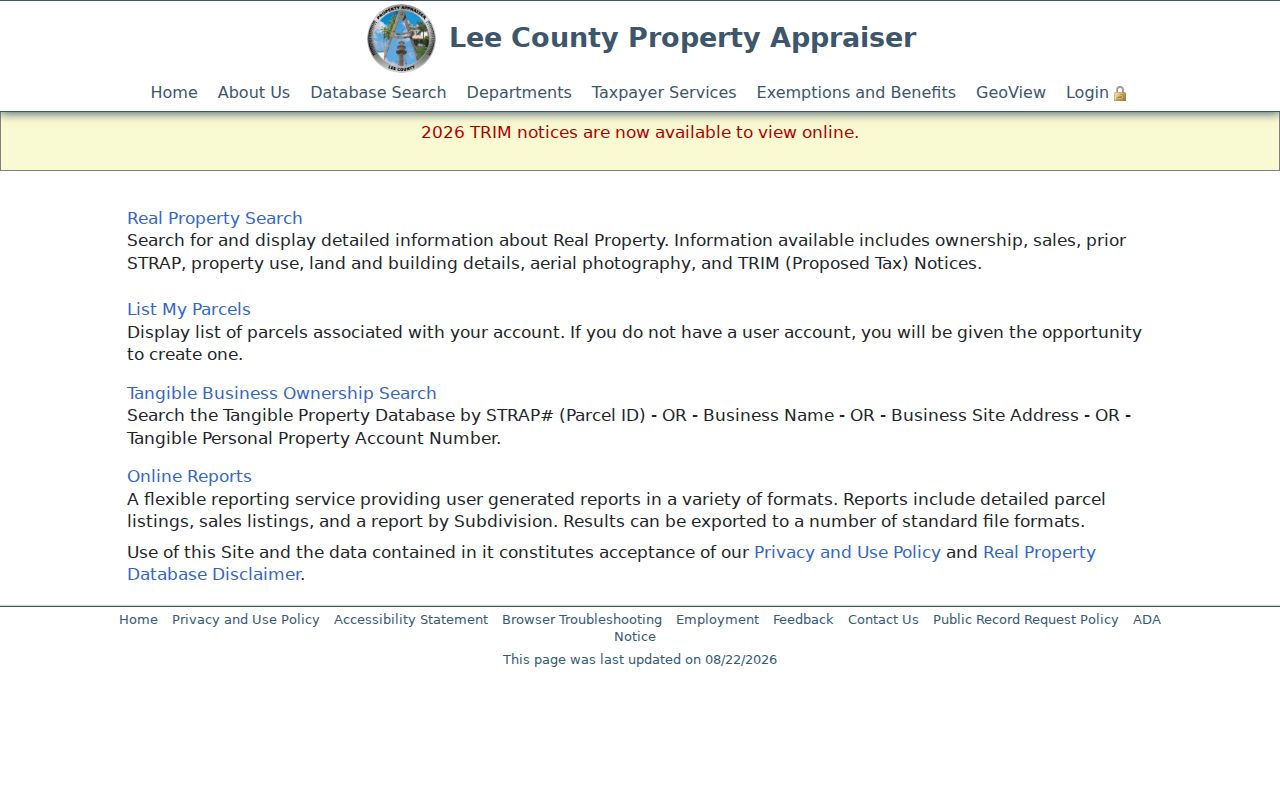
A subdivision report can place the parcel among related lots. That context helps when modern addresses do not match older records.
Do not treat a homestead exemption as a list of past residents. It supports an owner-occupancy inference for a tax period, not the presence of every spouse, child, relative, or other occupant.
Lee County Previous Residents in the Deed Chain
The Official Records index reaches 1887, the year Lee County was created. Its default From date begins January 1, 2010, so reset it before an older search. The Clerk recommends a surname plus first initial, which catches more spelling forms.
- Copy the current owner, STRAP, legal description, and newest deed citation from the parcel card.
- Open the purchase deed and confirm the buyer, seller, recording date, and land description in the image.
- Search the seller, who is the grantor in that sale, as a grantee to find that person's earlier purchase.
- Repeat the match backward. Keep an instrument or book/page citation for each link.
- For records that are restricted online, use the Clerk kiosk, Subscriber Service, counter, or mail route.
- Grantor
- The party who transfers an interest in land.
- Grantee
- The party who receives that interest.
- Chain of title
- The linked series of transfers for the same parcel.
- Legal description
- The lot, block, subdivision, metes-and-bounds, or other formal land identity.
Index evidence is not the full deed. Read the image for party capacity, legal description, and exceptions. Public images can be printed free. Certified and ordinary copies are also available online, at Fort Myers or Cape Coral counters, and by mail.
Index tip. Reset the 2010 start date and try surname plus first initial before deciding the chain has ended.
Street Changes and Lee County Previous Residents
Street names are fragile historical keys. FGCU oral history identifies Garret Street as modern Broadway and Anderson Avenue as Martin Luther King Jr. Boulevard. A deed's lot, block, subdivision, and plat can carry the same parcel through that change. Search both road names, then compare the legal description.
Lee County's rapid development also matters. Cape Coral and Lehigh Acres grew from large mid-century plats. Municipal custody shifted as Cape Coral, Sanibel, Fort Myers Beach, Bonita Springs, and Estero incorporated. A permit may sit with a city even though deeds and parcels stay countywide.
The FGCU Archives overview highlights regional source material:

Oral histories, photographs, and the Koreshan Unity Collection can restore community context that an ownership index cannot supply.
Match Lee County Previous Residents Across Sources
Deeds name owners. Directories and census schedules add occupants. Fort Myers Polk entries commonly name the resident, spouse, occupation or employer, and home address. Reverse street sections, when present, turn the address into the entry point. Full collection details belong in the Lee County city directory collections.
- Locate the address in the closest directory year.
- Copy the entry exactly, including spouse and abbreviations.
- Check adjacent directory years for moves, omissions, or a changed street form.
- Pair early runs with federal census schedules. Use Florida's 1935 and 1945 schedules between federal decades.
- Compare names with the deed owner, but preserve occupants who did not hold title.
The Fort Myers Regional Library Genealogy Room offers FamilySearch Affiliate access, in-library Ancestry, HeritageQuest, Fold3, microfilm, and free extended appointments. Its newspapers run from 1884 forward, and the News-Press necrology index helps close a household trail after a death.
Date a Lee County Building
A resident trail is stronger when the structure itself has a timeline. Compare the parcel card's building details with the earliest sale, first tax-roll appearance, permits, historical aerials, and the confirmed 1908 Fort Myers Sanborn coverage. Sanborn maps can show footprints and historical use, but only for mapped places and years.
County or municipal permit files may identify the applicant, contractor, work type, inspections, and dates. They still do not prove occupancy. GeoView's historical aerials can show when a structure or street pattern appeared, though the guide does not publish an exact year list.
The State Archives of Florida offers a broader fallback:
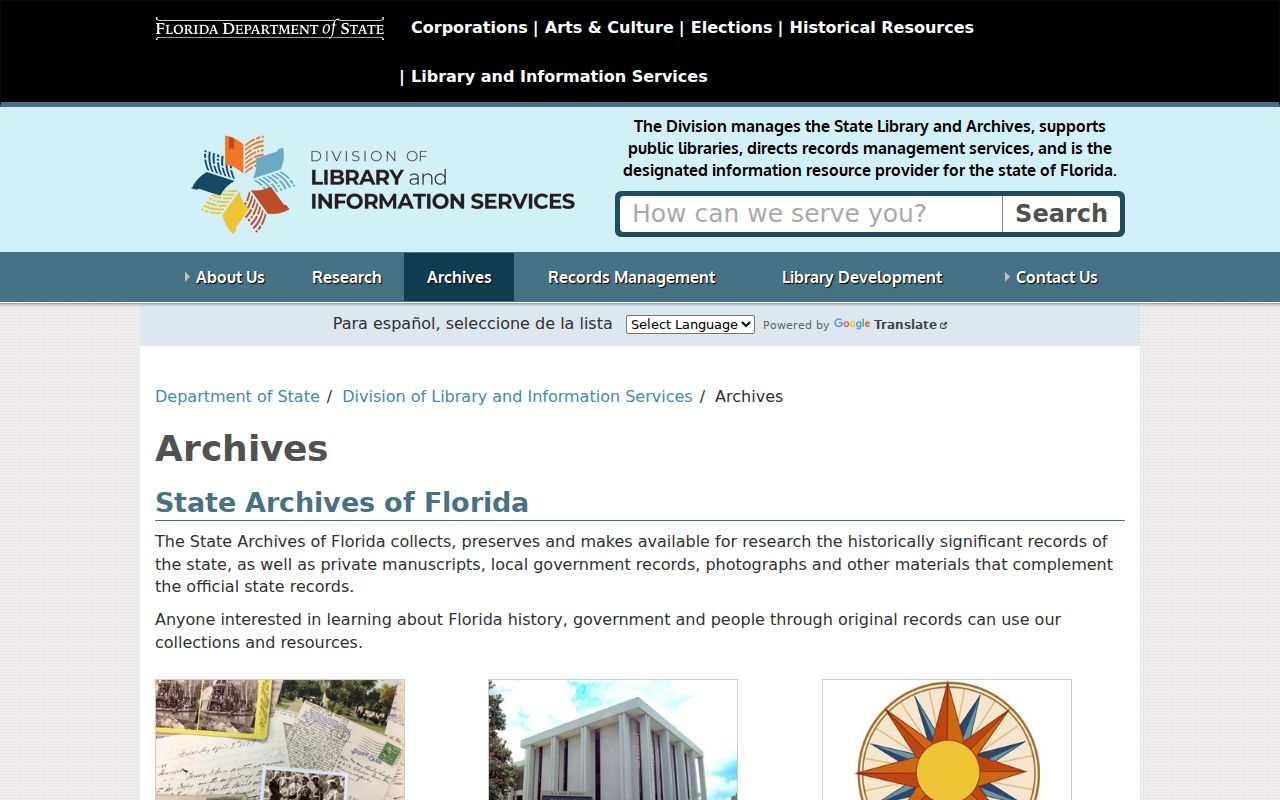
Cataloged maps, government records, and photographs can help when a local online index stops short.
Close Lee County Resident Trails
Probate and obituaries can explain why an owner disappears from later records. Search the Lee County Court Records Inquiry for probate cases, then compare the personal representative and heirs with later deeds. A docket is the chronological list of case events and filings. Public access varies by document and security level.
The Regional Library's News-Press microfilm and necrology index may supply death dates, relatives, prior places, and funeral details. Obituary requests use a name, death date, and city. Cemetery records can add another dated point, but do not assume a burial place was also a home address.
Property Fraud Alert can monitor a current name or parcel after the history is assembled. It sends notice when a matching land record is filed. It cannot stop a filing and is not a historical resident index.
Lawful use. Research previous residents for house history, genealogy, heirs, and personal curiosity. Never use a living person's address to stalk, harass, track, or harm them.
Before Lee County Existed
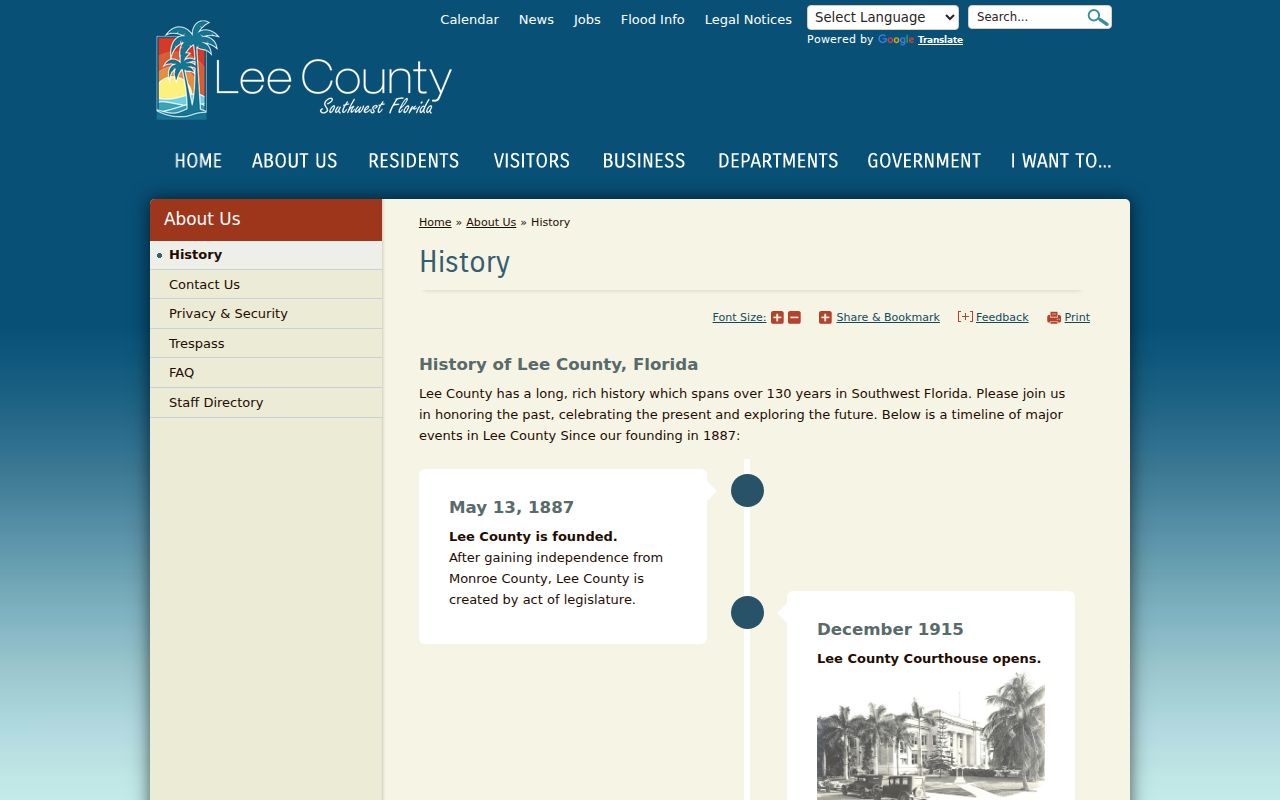
Lee County was created from Monroe County on May 13, 1887. The online Official Records chain begins that same year. A no-result before county formation does not show that the parcel or person lacked a record. Search Monroe County predecessor material, state archives, federal land sources, and surviving local books.
The county history route places the jurisdiction change in local context:
The Clerk's Historical Document Library adds more than 150 original volumes, including General Indexes and plats from 1887, marriage licenses from 1888, tax-deed and redemption books, and the unusual Marks and Brands Record 2 from 1899. Fragile books cannot be photocopied, but personal cameras and handheld scanners are allowed.